
English| EUR
Suggested for you
More currencies
Choose a language
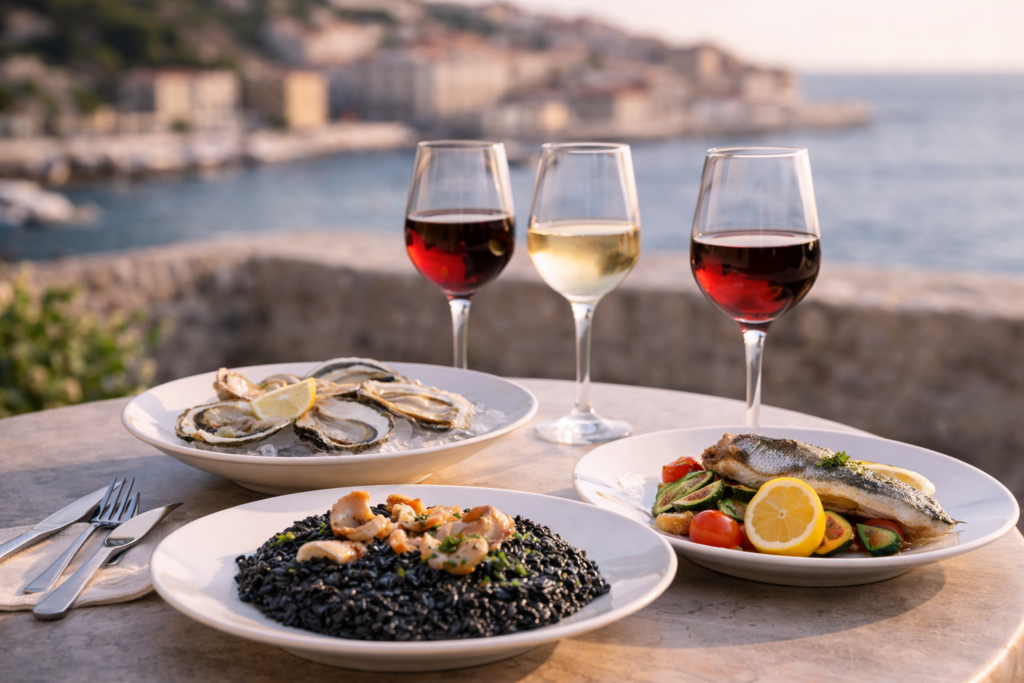
Dubrovnik's kitchen answers to the Adriatic on one side and the Konavle fields on the other, and the menus rarely translate themselves. This typical food in Dubrovnik guide names the dishes that predate the tourist boards, explains where each comes from, and points to the sections that handle the logistics.
Quick answer
Typical Dubrovnik food is Dalmatian coastal cooking: šporki makaruli, zelena menestra, black risotto, buzara-style shellfish, Ston oysters from Mali Ston Bay, and rožata for dessert. There is no entrance fee to eat — 0 EUR — because these are independent kitchens, not a single ticketed site. The practical window is 12:00–22:00, when lunch and dinner service overlap across the Old Town.
Ston, an hour up the coast, has harvested European flat oysters in Mali Ston Bay since antiquity; its salt pans have been worked since the 14th century. That single detail explains much of the typical food in Dubrovnik: the city ate what its own republic controlled. Dubrovačka kuhinja is not generic Mediterranean cooking. It is Dalmatian, narrow, and stubbornly seasonal, built on shellfish, olive oil, wild greens and lamb rather than on tomato-heavy pasta. Visitors arriving with an Italian template in mind tend to misread the menus. The Republic of Ragusa traded with Venice, the Ottoman interior and the Levant for centuries, and the kitchen kept the receipts. Šporki makaruli — macaroni under a slow beef sauce — belongs to 3 February, the feast of Saint Blaise, the city's patron. Zelena menestra pairs cured pork with collard greens, a combination few other Croatian towns claim as their own. Pašticada, marinated beef with gnocchi, travels the whole Dalmatian coast. Black risotto takes its colour from cuttlefish ink; buzara is a fast broth of garlic, white wine and shellfish. Peka means meat or octopus baked under an iron bell buried in embers, ordered hours ahead. Dessert runs to rožata, a caramel custard scented with rose liqueur, and to arancini, candied orange peel. Wine follows the same geography. The Pelješac peninsula produces Plavac Mali, with Dingač and Postup its steepest named sites, while the Konavle valley to the south sends vegetables, honey and lamb into the Old Town. Reading a menu becomes far simpler once these names are recognised, because most kitchens still print them in Croatian first and translate loosely underneath. Travellers researching typical food in Dubrovnik should treat this page as vocabulary and the dedicated sections that follow as the logistics — which kitchens serve what, when doors open, what an evening realistically costs. A guided Dubrovnik food tour compresses several of these dishes into a single walk, which suits a short stay. Anyone with more time can do it slowly: order one unfamiliar name per meal and let the Gruž fish market set the week's rhythm.
“The city ate what its own republic controlled — oysters from Mali Ston Bay, salt from Ston, lamb and honey from Konavle.”
Restaurants serving typical food in Dubrovnik maintain flexible schedules to accommodate visitors throughout the day. Establishments generally operate on a daily basis without standard closures.
Dining in Dubrovnik varies significantly depending on whether you choose casual street food or sit-down restaurant service. Costs are determined by individual establishment pricing rather than fixed entry fees.
How to spend less
Verdict: Expect to spend between 25 EUR and 80 EUR per day per person, depending on your choice of dining establishments.
Dubrovnik's konobas are small, family-run rooms where service follows local rhythms rather than tourist expectations. Knowing how to book, tip, and behave at the table keeps the exchange easy on both sides.
Everything you need to know about typical food in dubrovnik
The typical food in dubrovnik revolves around fresh seafood, black risotto, and locally produced olive oil. You will also find that grilled meats and pasta dishes are staples of the regional diet. Exploring the local gastronomy offers a deep look into the heritage of the Dalmatian coast.
The best arrival window for your visit is 12:00–22:00, which aligns with lunch and dinner services at most establishments. Planning your meal during these hours ensures you have the widest selection of menus. This timeframe provides the ideal opportunity to sample traditional flavors.
There is an entrance fee of 0 EUR for visiting independent culinary establishments, as you simply pay for the items you order. While the culinary experience is accessible, you should plan your budget according to your dining preferences. Independent restaurants operate on a pay-per-item basis.
Most establishments serving typical food in dubrovnik are family-friendly and accommodate younger diners. Many local restaurants offer relaxed settings where visitors of all ages can enjoy fresh ingredients. It is always helpful to look for venues that provide casual seating for a comfortable family experience.
A common mistake is neglecting to explore the side streets where many authentic taverns serve typical food in dubrovnik away from the main thoroughfares. Relying solely on popular tourist spots can sometimes lead to overlooking the most genuine culinary craftsmanship. Taking a short walk into the historic heart often reveals hidden gems.
Local dining spots maintain daily operations from 00:00–23:59, providing constant access to food throughout the week. While these hours are extensive, service intensity varies based on the time of day. Referencing the official site at https://visitdubrovnik.hr helps you confirm specific arrangements for your desired dining experience.
Private Dubrovnik Food Tours
Read more Tickets & toursDubrovnik Walking Food Tours
Read more GuideIs Dubrovnik Expensive for Food and Drink?
Read more Tickets & toursDubrovnik Food and Wine Tours
Read more Tickets & toursOld Town Dubrovnik Food Tours
Read more GuideDubrovnik Food and Drink Prices
Read more