
English| EUR
Suggested for you
More currencies
Choose a language
Dubrovnik has a reputation that arrives before the traveller does: a walled city where a seat with a view costs more than the meal. The reality is more layered, and it changes street by street. This is dubrovnik expensive for food and drink guide explains what actually drives the numbers, so the reader can plan without guessing.
Quick answer
Dubrovnik is more expensive than most Croatian cities for eating and drinking, but there is no citywide fee — entry to the city itself costs 0 EUR, and food and drink establishments operate independently throughout the city, roughly 00:00–23:59 across all seven days. Cost depends almost entirely on location, season and whether the venue faces the Stradun or sits a lane behind it.
Dubrovnik has almost no farmland. The Old Town sits on a rock between the Adriatic and the limestone slope of Srđ, which means nearly everything served inside the walls arrives by road, ferry or delivery van through a single logistics chokepoint at the Pile and Ploče gates. That fact, more than menu greed, is the first honest answer to the question is dubrovnik expensive for food and drink — supply chains are short in distance and long in cost. The second factor is geography of a different kind. The walled core is small, its commercial frontage finite, and the leases on the Stradun, Prijeko and the marble squares behind Onofrio's Fountain are among the most contested in Croatia. Rent is embedded in every plate. Step through a side lane toward Gundulić Square, or up into Gruž near the morning market and the ferry port, and the same ingredients — Adriatic fish, Pelješac wine, Ston oysters, Konavle olive oil — appear under a different arithmetic. Dubrovnik dining costs are not a single number but a gradient measured in metres from the main promenade. Season compounds it. Cruise arrivals and the summer peak concentrate demand into a narrow calendar, and Croatia's 2023 switch to the euro made price comparison easier for visitors while removing the psychological cushion of the kuna. Locals rarely eat where the day-trippers do. That is not a secret so much as an unremarked habit, and it is the most useful thing a visitor can borrow. What should a traveller do with this? Treat cost as a choice rather than a condition. Establishments here keep independent hours across the whole week, so there is no enforced rhythm to work around and no single arrival window that saves money. The savings come from where and how, not when the door opens. Anyone still weighing whether is dubrovnik expensive for food and drink should compare like with like: a konoba tasting menu against a konoba tasting menu, not a harbourside seafood platter against a bakery burek. The city rewards the visitor who learns its shape. Guided food walks exist precisely because the price gradient is invisible from a map, and because knowing which market stall, which cellar, which family-run konoba is worth the walk takes local knowledge that no listing site reliably conveys. The walls are the landmark. The food economy behind them is the thing worth reading properly.
“Rent is embedded in every plate — Dubrovnik's dining costs are not a single number but a gradient measured in metres from the main promenade.”
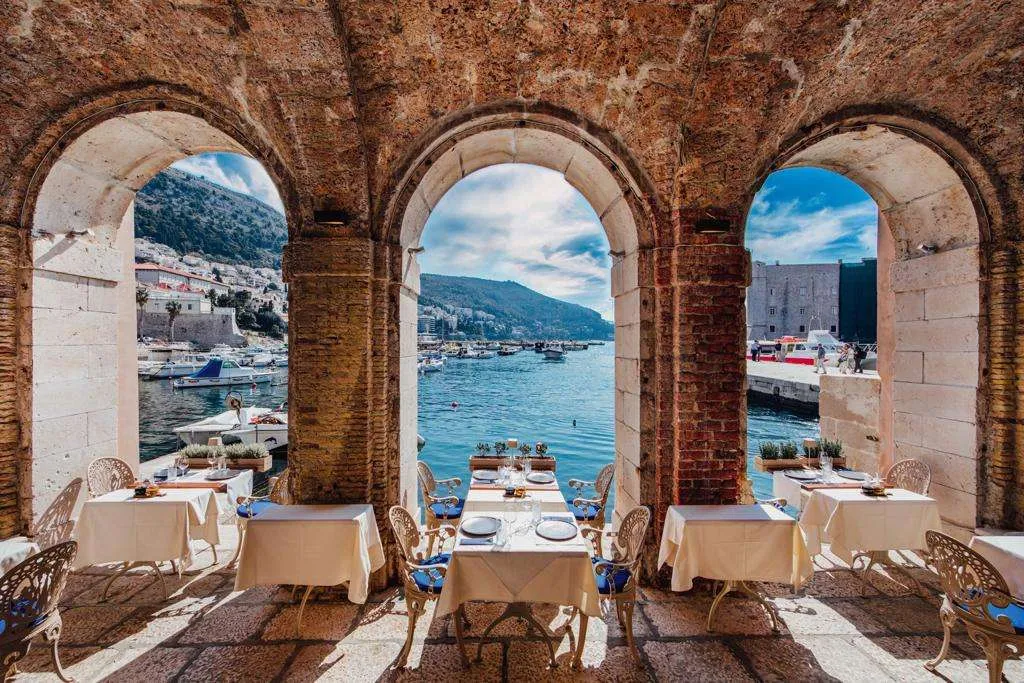
Dubrovnik food and drink prices vary significantly based on proximity to the Old Town. Establishments within the historic walls typically command a premium, while options in surrounding neighborhoods often provide lower price points.
How to spend less
Verdict: Daily food and drink budgets typically range from 40 EUR for budget travelers to over 100 EUR for those prioritizing premium dining.
Dining options in Dubrovnik range from quick street-side bites to formal establishments. Visitors can manage costs by choosing venues based on location and service style.
street
Located in the Old Town, this spot specializes in casual seafood options like octopus burgers. It serves as a contrast to formal sit-down restaurants.
market
Situated near the Old Town port, this local market allows visitors to source fresh ingredients for self-prepared meals. It is a practical alternative to dining out.
restaurant
This venue in the Old Town offers Mediterranean-Asian fusion dishes. It represents a mid-range dining experience for those seeking diverse flavors.
restaurant
Positioned along the historic city walls, this establishment provides fine dining with views of the port. It is positioned at the higher end of the local price spectrum.
Most visitors who overspend in Dubrovnik do so through a handful of avoidable habits rather than through the city being uniformly costly. These are the errors that inflate a bill fastest, and the corrective move for each.
Sitting down on Stradun without checking the menu
Read the posted menu board before taking a seat, since prices on the main thoroughfare and the terraces facing it sit well above those a few streets inland. Walk two or three minutes toward Prijeko, Od Puca or the side lanes off Stradun and compare before committing.
Ordering drinks without asking the price first
Beverages are where bills quietly climb, especially cocktails at cliffside and view bars where you are paying for the position. Ask for the drinks list rather than ordering verbally, and confirm the price of anything not printed.
Assuming a bottle of water arrives free
Table water is almost always billed and often served in large format. Specify a small bottle or ask for tap water, which is safe to drink in Dubrovnik.
Missing the cover and bread charges on the bill
Some places add a per-person cover or charge for bread and olives delivered unasked. Decline items you did not order when they arrive, and scan the bill's smaller lines before paying.
Eating every meal inside the Old Town walls
The Old Town concentrates the highest-priced options in the smallest area. Cross to Lapad, Gruž or Ploče for at least one meal a day, where the same dishes are aimed at residents rather than day visitors.
Not confirming whether a fish price is per kilo
Fresh fish and seafood are frequently priced by weight, not per portion, which produces a much larger figure than expected. Ask for the weight and the resulting total before the kitchen prepares it.
Dubrovnik experiences significant price fluctuations and crowding based on the peak tourist season, which runs from June through August. Visiting during the shoulder months provides a balance of moderate costs and lower demand.
Warm, sunny, 25°C to 30°C
High demand leads to premium pricing and limited availability at popular dining spots.
Pleasant, 18°C to 24°C
Establishments offer more consistent pricing and availability as tourist volume decreases.
Cooler, 10°C to 15°C
Many venues reduce hours or close, though remaining establishments maintain standard pricing.
Verdict: The best time to visit for balanced pricing and availability is during the shoulder months of April, May, or October.
Food and drink establishments in Dubrovnik operate independently throughout the city. While individual businesses set their own schedules, the city remains active across all days of the week.
Everything you need to know about is dubrovnik expensive for food and drink
Dining prices in the historic center are generally higher than in suburban areas due to the high demand from travelers. Visitors often find that choosing konobas or taverns slightly outside the main walls provides better value. Understanding whether is dubrovnik expensive for food and drink depends largely on your choice of venue and location.
To keep costs low, look for fixed-price lunch menus or visit local bakeries for fresh pastries. Many travelers find that researching price levels before dining helps avoid surprises. It is a common query to ask is dubrovnik expensive for food and drink, but local markets also offer affordable fresh ingredients.
Most restaurants include service in the bill, though a modest tip for exceptional service is appreciated by waitstaff. While some premium spots may have higher costs, you will find a range of options catering to different budgets. When evaluating is dubrovnik expensive for food and drink, checking menus posted outside establishments remains a smart practice.
Dining out with children is common, and many establishments offer child-friendly portions and welcoming atmospheres. Finding affordable meals for families is manageable by avoiding peak tourist traps along the main thoroughfare. Even when families wonder is dubrovnik expensive for food and drink, they can find balanced options throughout the city.
Joining a curated food tour is an effective way to discover authentic flavors and hidden gems that offer high-quality local cuisine. These experiences allow you to taste regional specialties like black risotto, oysters, and local wines without the guesswork. Engaging with a guided tour helps bridge the gap between tourist dining and genuine local food culture.
Food and drink establishments operate independently throughout the city, meaning you can find service at various times throughout the day and night. It is helpful to check individual business listings as there is no single city-wide schedule. Since establishments operate independently, you can easily find dining options within the 00:00–23:59 arrival window.
Private Dubrovnik Food Tours
Read more Tickets & toursDubrovnik Walking Food Tours
Read more GuideTypical Food in Dubrovnik
Read more Tickets & toursDubrovnik Food and Wine Tours
Read more Tickets & toursOld Town Dubrovnik Food Tours
Read more GuideDubrovnik Food and Drink Prices
Read more